Wednesday, March 31, 2021

U.S. report: No evidence of massacre at Lekki Tollgate

By Bola Olajuwon, Assistant Editor and Vincent Ikuomola

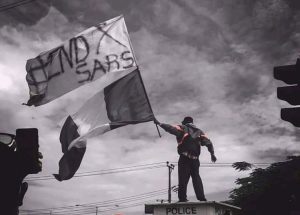
The United States (U.S.) Department of States says there is no verifiable evidence on the reported killings of #EndSARS protesters at the Lekki tollgate on October 20, last year.

It stated this in a report entitled: ‘2020 Country Reports on Human Rights Practices: Nigeria.’

But, British High Commissioner Catriona Laing said Nigeria’s worsening security situation is a source of concern to the United Kingdom.

He said UK was however, prepared to assist Nigeria in the war against insecurity.

There had been reports and claims of massacre at the toll gate by the military during the protests by youths against the activities of the now-disbanded Special Anti-Robbery Squad and bad governance.

A special report by Cable News Network (CNN) had also said soldiers shot at protesters, killing many.

The US,  in its  report,  stated that accurate information on fatalities resulting from the shooting was not available.

The report reads in part: “Although the protests were allowed to proceed unimpeded in most places, civil society observers reported the arrest of some peaceful protesters in Lagos, Osun, and Kano states on charges of “conduct likely to cause a breach of public peace.” All those arrested were released within days of their arrest.

Read Also: Why I joined Lekki toll gate Protest, by Mr Macaroni

“In October, #EndSARS protests were staged in states across the country to demand an end to police brutality. Demonstrations were largely peaceful, but some protests turned violent after criminal elements infiltrated the protests and security forces fired at protesters at the Lekki Toll Gate on October 20.

“According to #EndSARS Legal Aid, by year’s end, a network of volunteer lawyers had secured the release of 337 protesters, but it was unable to confirm how many remained in detention.”

The US department   went on with what it considers a detailed analysis of what transpired on October 20 by saying: “Accurate information on fatalities resulting from the shooting was not available at year’s end.

“Amnesty International reported 10 persons died during the event, but the government disputed Amnesty’s report, and no other organisation was able to verify the claim. The government reported two deaths connected to the event. One body from the toll gate showed signs of blunt force trauma. A second body from another location in Lagos State had bullet wounds.

“The government acknowledged that soldiers armed with live ammunition were present at the Lekki Toll Gate. At year’s end, the Lagos State Judicial Panel of Inquiry and Restitution continued to hear testimony and investigate the shooting at Lekki Toll Gate.”

On human rights abuses generally, the U.S. report asserted that there were reports that the government or its agents committed arbitrary, unlawful, or extra-judicial killings.

On insurgency, the department noted that Boko Haram and the Islamic State in West Africa continued attacks on “civilians, military, and police; recruited and forcefully conscripted child soldiers; and carried out scores of person-borne improvised explosive device attacks–many by coerced young women and girls–and other attacks on population centers in the Northeast and in Cameroon, Chad, and Niger. Abductions by Boko Haram and the Islamic State in West Africa continued”.

“According to credible international organisations, prior to their dissolution, SARS units sometimes used torture to extract confessions later used to try suspects. President Buhari disbanded SARS units in October, 2020 following nationwide #EndSARS protests against police brutality.

“Of the states, 28 and the FCT (Federal Capital Territory) established judicial panels of inquiry to investigate allegations of human rights violations carried out by the Nigerian Police Force and the disbanded SARS units.

The report also asserted that local non-governmental organisations (NGOs) and international human rights groups accused the security services of illegal detention, inhuman treatment, and torture of criminal suspects, militants, detainees and prisoners.

The report also condemned “unlawful and arbitrary killings by both government and non-state actors; forced disappearances by the government, terrorists, and criminal groups; torture and cases of cruel, inhuman, or degrading treatment or punishment by the government and terrorist groups; harsh and life-threatening prison conditions.

The United Kingdom advised the Federal Government to be more “precise  about the security support it needs  from the U.K”.

Laing  spoke yesterday at the sidelines of a reception held to welcome home, the 2019/2020 U.K Chevening Scholarship beneficiaries.

She explained that the U.K   team  has been helping the Nigerian military in the areas of training, campaign planning  and  countering Improvised Explosive Devices (IEDs).

Laing said: “We are extremely concerned about the deteriorating security situation.

“Nigeria is facing a lot of problems everywhere. In the Northeast there is  terrorism; in the Northwest, banditry, and kidnapping; in the Middle Belt,  farmer-herder conflicts and  in the South, the Niger Delta conflict everywhere.And the secession movements in the Southeast. So, Nigeria is really struggling.

She said: “We are here to support and help. We have the military team here, who came here after the Chibok girls were kidnapped actually. We are still here training the Nigerian military, helping them to do campaign planning and how to counter IEDs.

“We are here for a long time. This is a Nigerian partnership. Your insecurity becomes our insecurity if we don’t help you tackle it. So, we are here and we are trying to do our best to support you.”


Fed Govt parleys doctors to avert strike

By Frank Ikpefan, Abuja

Doctors were told Wednesday night to consider the plight of the 80 per cent of Nigerians in need of healthcare and shelve their planned nationwide strike scheduled to begin today.

Making the plea, the Federal Government reminded the doctors under the auspices of the National Association of Resident Doctors (NARD) about the toll of the COVID-19 pandemic on the health sector.

The government’s appeal was made through Labour and Employment Minister Dr. Chris Ngige at a conciliatory meeting with NARD leadership in Abuja.

Dr. Ngige said majority of the welfare issues under contention were almost resolved even before the letter of complaint and notification of a planned strike action was delivered at his ministry.

The meeting was still ongoing at the ministry’s conference room as of the time of filing this report last night.

Ngige, before the meeting went into a closed session, said discussions were ongoing on health hazard allowance, noting that as a conciliator, the complaints of the doctors have been adequately communicated to relevant quarters.

Read Also: Don’t go on strike over minimum wage bill, FG begs Labour

The minister added that several meetings have been ongoing and proposals drawn up address the situation before it degenerates into a strike.

He said: “We are here because we have started solving your issues. We put up proposals with given timelines on how to deal with them. We will look at those proposals with you, fix adequate timelines so that the people on government side will be implementing and marking them as they execute them.

“I have held informal meetings with the finance ministry and they told me they have started solving some of the problems, the two committees in the National Assembly have also tried to get you and your employers on same page. We have to intervene to ensure industrial peace in the health industry.

“We are in a very bad period health wise; the world over and Nigeria is not an exception so, we have to think about the generality of Nigerians because right now, 80 per cent of Nigerians are our patients because of the COVID-19 pandemic so we have to look at the issues that way and see how we can get the best out of this situation.”

Permanent Secretary, Federal Ministry of Health, Abdullahi Mashi, who represented his ministers, appealed to the doctors to reconsider the planned strike.

“Most of the issues are almost solved the only thing thing remaining is to get the commitment of NARD to suspend the strike action. All efforts are being put in Place,” the permanent secretary said.

NARD President Dr. Uyilawa Okhuaihesuyi said his colleagues were looking forward to resolving all issues and grievances during the meeting.

The doctors had resolved to commence “a total and indefinite strike” beginning from 8am today, if the Federal Government failed to accede to its demands.

Their decision was contained in NARD’s Extraordinary National Executive Council meeting on March 27 at the Trauma Center of National Hospital, Abuja.


Policemen killed in Gunmen attack on Soludo

By Nwanosike Onu, Awka

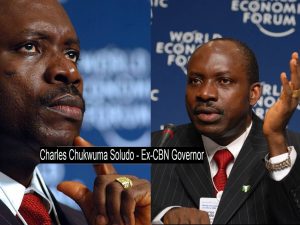
Tension has heightened in Anambra State, following the kidnap of the Commissioner for Public Utilities, Emeka Ezenwanne, and killing of three policemen attached to a former Governor of Central Bank of Nigeria CBN, Prof. Charles Soludo, by suspected gunmen.

The incident happened about 5.30 pm on Wednesday during a political gathering organised by Soludo, at a civic centre in his hometown, Isuofia,  Aguata Local Government Area.

Soludo, an All Progressives Grand Alliance (APGA) chieftain and  frontline aspirant in the November 6 governorship poll in the state, was whisked away unhurt but some participants of the event were injured in the process.

A government official, who pleaded not to be named, said the gunmen arrived in a commando-like style in three vehicles.

He added that Soludo left the state immediately after the incident, adding, “nobody is safe here again. ”

Another eyewitness told The Nation that one of the three slain policemen was a member of the disbanded   Special Anti-Robbery Squad (SARS) in the state.

Read Also: Gunmen hack Inspector to death, cart away arms

He said: “A couple of minutes back,  gunmen disrupted an interactive session between Isuofia youths and a former CBN governor, Prof. Soludo, at the town’s civic center.

“Three policemen, including a former member of SARS, were  shot dead at meeting.”

An aide  to the former CBN boss, said he could not explain the whereabouts  of his boss because of confusion that erupted when the gunmen struck.

“There was a stampede, I don’t know where Prof. Soludo is now,” he explained but added that he gathered that  the “Commissioner for Public Utilities,   Ezenwanne, was taken away by the gunmen.”

The state Police Command Public Relations Officer, Ikenga Tochukwu, confirmed the incident, but said he was not aware of the number of casualties

He said,” The incident happened at a political gathering in  Isuofia. But as of now (yesterday night), I’m still gathering information about the incident.”

The  Police of Commissioner, Monday Kuryas, visited the community last night with his men.

Kuryas appealed to the people of and other residents of the state to remain calm

He said that the command had already launched manhunt for the gunmen, adding that hoodlums would not be allowed to overrun the state


‘718,412 persons vaccinated so far’

By Moses Emorinken, Abuja

An update by the National Primary Health Care Development Agency (NPHCDA) shows that 718,412 Nigerians have gotten their first jabs of COVID-19 vaccine

This brings the proportion of those vaccinated to 35.7 per cent.

Read Also: Mixed reactions as Fani-Kayode receives COVID-19 vaccine

Lagos, with 136,356, sits atop the vaccination chat. It is trailed by Ogun (50,870), Kaduna (46,474) and Bauchi (33,368).

But in terms of percentage vaccinated relative to the target population, Kwara, Ogun and Bauchi are leading the states with 104.2 per cent, 89.9 per cent, and 82.8 percent respectively.


Herdsmen attack: Death toll rises to 25 in Ebonyi

By Ogochukwu Anioke, Abakaliki and Sanni Onogu, Abuja

The death toll has risen to 25 in Monday’s attack on three Ebonyi communities, the state Association of Local Governments of Nigeria (ALGON), Ebonyi chapter, said yesterday.

Spokesman of the group and Chairman of Izzi Local Government Area, Paul Nwogha, condemned the attack.

He said the Association has given security agencies 48 hours to arrest the attackers.

According to him, more bodies were discovered in the bushes yesterday by search parties, which brought the death toll to 25 from the initial 15 reported.

The Ebonyi State Government has directed all local government chairmen to form local vigilante to fish out criminal elements in their midst.

Commissioner for Information and Orientation, Uchenna Orji states, said the state Executive Council directed that 100 Neighborhood Watch in each council be deployed to effectively police the various communities.

He said: “The EXCO frowned very seriously at the killings in Egedegede Community in Ishielu Local Government Area. The Governor visited the scene and demanded justice for the victims from the security agencies”.

Orji said that the State Executive also recommended to Ebonyi State House of Assembly that all elected/appointed officials from Effium and Ezza Effium, including the councillors, the Council Chairman and the lawmakers be suspended.

Read Also: Imo monarch attacks Okorocha inside plane

Governor David Umahi ordered dusk to dawn curfew in Effium with immediate effect as part of efforts to restore peace to the area.

The curfew was imposed following renewed hostilities between the people of Effuim and Ezza Effuim which has led to the death of many persons and the destruction of properties.

Dr Monday Uzor, Press Secretary to the Deputy Governor, Dr Kelechi Igwe, said Umahi issued the order through the Deputy Governor while on an assessment visit to the community.

He said that both the military and the police have been deployed to man all exit and entry points including forests and bush parts to enforce the order.

“Therefore, miscreants and hoodlums, including mercenaries hiding in the forest and bushes, are advised to vacate the community immediately in their interest as security agents have been directed to route them out,” he said.

It was learnt that the herdsmen who attacked the communities may have been evicted for alleged destruction and theft of farm produce from farms in the area.

A member of the community said: “They were destroying our farmlands, almost destroying our source of livelihood, so we asked them to leave.”

The source said that before they left, they told the villagers that they would deal with them, a threat they did not take seriously.

A resident of the community, Angela Osinachi, said on the day of the attack, about four herdsmen were seen moving about in the area.

“On Monday afternoon, some children who went hunting in the bush rushed back home and started saying they saw herdsmen people carrying different kinds of guns.

“Some elders told them that they could be some forest guards from Enugu. But as we were contemplating that, we started hearing sounds of gunshots here and there. That was when people started running for their lives.

“That night, we ran and ran through the bush to Enugu State from Ebonyi State. Some even slept in the bush that night. These people killed many people and destroyed some property,” she said.

Another resident, 77-year-old Mrs Rosemary Ozara, said the herdsmen destroyed their farmlands.

She said: “We were preparing to cook night food and some had even finished cooking and were about to sleep when all of a sudden we started hearing gunshots.

“We started running and kept running through the bushes until we got to Ehamufu in Enugu State. We just got back to this village to get some food to eat.

“Almost all the natives have run away for the sake of their dear lives because nobody considers this community to be safe again.

“For like six years now, we would plant but can’t harvest our farm produce. Each planting season, they would uproot everything we planted and gave it to their cows for feeding.

“This had continued for a while and we approached them and said since you people cannot leave our crops to grow, leave our community for us.

“Then after a while, they left but threatened that nobody would be in this community. They said they would deal with us and pursue us out of the community.

“About 20 persons were killed in this community and not talking about those from Enugu, who were travelling through the community from other cities.”

Another member of the community, Okey Emmanuel, alleged that some persons, who are mostly women, are still missing.

He said they may have been returning from the market and may have been abducted by the herdsman.

“There are some females who were coming from the market and we don’t know their whereabouts now. That means they must have taken them away,” Emmanuel said.

The Town Union President of Nkalaha community, Mr. Ikechukwu Onwa, expressed deep sadness over the incident.

Town Union President of Nkalagu autonomous community, Joseph Chibo, lamented that efforts to foster peace between the herdsmen and the community failed.

The Southeast Caucus of the Senate urged the Inspector-General of Police, Mohammed Adamu and heads of security agencies to expeditiously fish out those responsible for the recent killings.

Leader of the caucus, Senator Ike Ekweremadu, in a statement by his spokesman Uche Anichukwu, said the killings must not go unpunished.

“This act is most unfeeling and gruesome, and we condemn it in totality. But more importantly, this must not go unpunished like others before it.

“It is imperative to warn that the Nigerian state is fast de-legitimising itself by its failure to discharge the primary purpose of government, which is security and welfare of the people, as clearly prescribed in Section 14 of the 1999 Constitution.

“The widespread killings and all manner of violent crimes across the country have continued to worsen because the perpetrators walk away with their crimes, never arrested or brought to book.

“Therefore, this is particularly a call on the Inspector General of Police and the heads of security agencies to bring the perpetrators of the Ebonyi killing to book expeditiously,” the caucus said.


UK Medical Trip: Buhari Legally Right But Morally Wrong – Abaribe

buhari

Senate Minority Leader, Enyinnaya Abaribe, has said President Muhammadu Buhari was morally wrong to travel to the UK for medical check-up.

Buhari on Tuesday afternoon, departed the shores of Nigeria for London, the United Kingdom through the Abuja International Airport.

Buhari is not expected back in the country until the second week in April according to an earlier statement by his spokesperson, Femi Adesina on Monday when he announced the president’s trip to Nigerians.

Recall that in 2017, the president spent over 150 days in the UK, treating an undisclosed ailment, while in May 2018, he returned to the UK for four days to see his doctor.

Speaking on Channels TV on Wednesday,Senator Abaribe (PDP-Abia South) recalled how Buhari criticised medical tourism and  promised not to embark on another foreign medical check-up.

The lawmaker representing stated that COVID-19 was meant to enable the federal government to upgrade medical facilities in the country.

Abaribe said, “Buhari has not done anything wrong in the eyes of the law, he has the right to take care of himself medically but morally he has done everything wrong this was the president that told us that he would never go for check up or trip abroad and condemned the huge amount of money spent on medical tourism before he was elected in 2015.

“But shortly after he lived more abroad than in Nigeria. When COVID -19 pandemic started we were assured that medical facilities in Nigeria will be upgraded and there will be no need of our money spent abroad but we are surprised nothing has changed and he still depends on going abroad for medicals

“One would have expected that the state house clinic would have minimum to do a check-up for him but what can we do we have seen an APC government that says one thing and does another.”


Top Nigerian Newspaper Headlines For Today, Thursday, 1st April, 2021

Top Nigerian Newspaper Headlines For Today, Saturday, 23rd January, 2021

Good morning Nigeria, welcome to Naija News roundup of top newspaper headlines in Nigeria for today Thursday, 1st April 2021

1. Presidency Reveals Sponsors Of Boko Haram Insurgents, Bandits

The Presidency has revealed the sponsors of Boko Haram insurgents and bandits terrorising the North and the entire nation.

During an appearance on Channels Television on Tuesday night, Presidential Spokesman, Garba Shehu, said sponsors of insurgents and bandits include some bureau de change operators with contacts abroad.

He added that there is evidence that money is being sent from United Arab Emirates (UAE) to Boko Haram leaders in the country.

The Presidential aide noted that the evidence shows that there is a link between kidnapping for ransom, banditry, and Boko Haram.

Shehu stated that security agencies have arrested some suspects and that after investigation, those involved will be exposed and prosecuted.

He, however, warned that there would be no sacred cows even if those involved were found to be politicians.

2. North vs South: APC In Major Crisis Over Presidential Candidate – Buba Galadima

A former ally of President Muhammadu Buhari, Buba Galadima has said the All Progressives Congress (APC) was divided over the selection of its presidential candidate in the 2023 election.

Speaking while featuring on AIT’s ‘Focus Nigeria’ programme on Wednesday, the former APC stalwart said the ruling party cannot reach a consensus on its candidate for the election.

Galadima said four members of the political party, two each from the north and south, have made an agreement to support each other.

3. Anambra 2021: I Have No Anointed Aspirant – Peter Obi

A former Governor of Anambra State and vice-presidential candidate of the Peoples Democratic Party in the 2019 general elections, Peter Obi, on Wednesday said he does not have an anointed aspirant in the state governorship election.

Obi while speaking at the party’s interactive meeting with state officials, local government officers, wards chairmen and secretaries, said that every aspirant must go for primary.

He said: “If anybody comes to you and tells you that he has my blessing or he has paid me anything to support him or her, please ignore the person.”

4. Why Fulani Bandits Are Now Helping Military Kill Islamist Terrorists – Gumi

Islamic cleric, Sheikh Ahmad Gumi, on Wednesday, disclosed that Fulani bandits are at war with Ansaru terrorist group who are attacking the northern part of Nigeria.

According to the Guardian, the cleric noted that the ideology of terrorist groups is different from the plans of terrorist groups, adding that Fulani man is concerned about survival.

Gumi further stated that the bandits have given the Ansaru terrorists 10 days to vacate their territory.

The cleric urged the government to quickly intervene, noting that their visits to the forests were yielding positive results.

He added that his meeting with the bandits made them resist attempts by the Ansaru terrorists to indoctrinate them.

Gumi claimed that the bandits are carrying out the duties of the military, which is to fight and kill terrorists.

5. Court Bars FG From Blocking SIM Cards Not Linked To NIN

A Federal High Court in Lagos State has barred the Federal Government from blocking SIM cards not linked to National Identity Numbers (NIN) next month.
The Ministry of Communications and Digital Economy had, through the Nigerian Communications Commission, asked operators to block all SIM cards not linked to NIN by April 9, 2021.

The deadline had caused many Nigerians to gather at offices of the National Identity Management Commission (NIMC) in disregard of COVID-19 protocols.

However, a former second National Vice-President of the NBA and human rights lawyer, Monday Ubani, filed an originating motion and asked the court to stop the Nigerian Communications Commission from disconnecting all SIM Cards not linked to NIN.

6. We Can’t Verify Claims Of Killings At Lekki Tollgate ― US Govt

The United States Government has dismissed the alleged killings of protesters at the Lekki tollgate on October 20, 2020 by soldiers.

It made this known in a report released by the US Department of State, Tagged ‘2020 Country Reports on Human Rights Practices: Nigeria,’ released on Tuesday, March 30, 2021.

According to the US department, the claim that protesters were killed by Nigerian soldiers at the Lekki tollgate could not be verified.

The US government added that accurate information on fatalities resulting from the shooting was not available at the end of the year.

It, however, acknowledged that soldiers armed with live ammunition were present at the Lekki Toll Gate but nobody was killed.

7. Buhari: Why I Won’t Go Abroad For Medical Check-up – Wike

Governor Nyesom Wike of Rivers State has maintained that he would not travel abroad for medical check-up.

He stated this on Wednesday when a delegation of the Medical and Dental Council of Nigeria paid him a courtesy visit at the Government House, Port Harcourt.

President Muhammadu Buhari on Tuesday departed the shores of Nigeria for London, the United Kingdom through the Abuja International Airport.

The President departed the country in one of the jets available in the presidential fleet, Naija News understands.

Buhari is not expected back in the country until the second week in April according to an earlier statement by his spokesperson, Femi Adesina on Monday when he announced the president’s trip to Nigerians.

But speaking to the delegation, Wike said everything he needs for medical examination was in the Government House Clinic built by his administration.

8. Umahi Declares Curfew In Ebonyi Community

Governor David Umahi of Ebonyi State has declared a dusk to dawn curfew in Effium community in Ohaukwu LGA in ordered to curb the killings and destruction of properties in the area.

Naija News reports that this was made known to newsmen on Wednesday b the Commissioner for Information and State Orientation, Barr Uchenna Orji.

While revealing that the decision was reached at the state executive council meeting, Orji said the state approved the addition of 600 soldiers that would be drafted to restore peace in Effium community.

It was gathered that despite the peace initiative and signing of peace pact by stakeholders of both clans, killings and destruction of properties still persist in the area.

9. Unknown Gunmen Attack Ex-CBN Gov, Soludo, Kill Policemen

Unknown gunmen, on Wednesday, attacked the former Central Bank of Nigeria Governor, Prof. Charles Soludo, in his hometown.

It was reported that Soludo was attacked at Isuofia in Aguata Local Government Area, during an interactive session between him and some Isuofia youths.

The former Governor of CBN has shown interest in the governorship race in Anambra State on the platform of the All Progressives Grand Alliance, APGA.

A source that spoke on the incident disclosed that two policemen attached to him were reportedly shot dead by the gunmen.

10. Law Enforcement Officers To Wear Body Cameras In Lagos – Sanwo-Olu

Governor Babajide Sanwo-Olu of Lagos State has disclosed that law enforcement officers in the state would start wearing body cameras.
Speaking on Tuesday, the Lagos governor stated that plans were already in motion to that effect.

While revealed that law enforcement officers would be trained on the use of the equipment, Sanwo-Olu added that they would be trained by the Lagos state Law Enforcement Training Institute (LETI).

Recall that the general manager of the Lagos State Traffic Management Authority (LASTMA), Olajide Oduyoye, had back in February said the officers will use cameras to capture traffic violations.

That’s the top Nigerian newspaper headlines for today. Read more Nigerian news on Naija News. See you again tomorrow.


INEC Fixes Date For FCT Council Election

Live Stream: INEC Chairman Press Briefing On 2019 Elections

February 12, 2022, have been set aside for election into the six area councils of the Federal Capital Territory in Abuja.

The Independent National Electoral Commission announced this on Wednesday, March 31, 2021, Naija News reports.

The INEC National Commissioner and Chairman, Information and Voter Education Committee, Festus Okoye, while disclosing details of the election in a statement dated, Wednesday, March 31, said the three-year tenure of the six chairmen and 62 councillors would expire in May 2022.

The statement reads: “By virtue of Section 108 (1) & (3) and 113 (1)(a) and (b) of the Electoral Act 2010 (as amended), election into all area councils shall be held on the same date and time throughout the FCT. This shall take place not less than 150 days before and not later than 30 days before the expiration of the term of office of the last holder of that office.

“Furthermore, by section 113 of the Electoral Act, an area council shall stand dissolved at the expiration of a three year period, starting from the date the chairman took the oath of office, or when the legislative arm of the council was inaugurated, whichever is earlier.

“The chairman and councillors of the area councils were elected on March 9, 2019, and sworn in on the May 19, 2019 and by paragraph 1© of the commission’s guidelines and regulations, “where the end of the tenure of FCT Area Council does not coincide with a general election year, the election to the office of the chairman, vice-chairman and councillors of the area councils shall hold on Saturday closest to 100 days to the end of the tenure of the elected officials of the area councils.”

Okoye further explained that the commission was concerned about the spate of acrimonious primaries, as well as the nomination of unqualified candidates, which results in avoidable litigations, and the nullification of elections by-election petition tribunals. He advised political parties to conduct rancour-free primaries, guarantee a level playing field for all aspirants and conduct necessary due diligence on all forms and documents that would be submitted to the commission.

The commissioner again urged registered political parties to pay close attention to the timelines and schedule of activities outlined in the timetable and schedule of activities as they are constitutional and statutorily provisions.

Naija News understands that FCT is the only part of the country where INEC is responsible for the conduct of council election.

Meanwhile, a former Governor of Anambra State and vice-presidential candidate of the Peoples Democratic Party in the 2019 general elections, Peter Obi, on Wednesday said he does not have an anointed aspirant in the state governorship election.

Obi while speaking at the party’s interactive meeting with state officials, local government officers, wards chairmen and secretaries, said that every aspirant must go for primary, Naija News reports.


Violent Husband Knocks Out His Wife’s Teeth – [Photo]

Nigerian On-Air Personality and Humanitarian, Yolanda George-David has reported the case of a woman who was assaulted by her husband.

Naija News understands that the OAP took to her social media page, Instagram precisely to share a photo of a woman whose teeth was knocked out and caused to bleed by her husband.

The Humanitarian, however, lamented how many victims of domestic abuse prevented justice from availing after referring their cases to DSVRT (Domestic and Sexual Violence Response Team).

Yolanda added that it’s important for victims of such violent attack to allow for the abusers to face the wrath of the law in other to stop them from harming another person in the future.

See below a photo of the woman with her face disfigured:

Meanwhile, Naija News had reported that Niger State Command of the Nigeria Police Force has apprehended a young man for allegedly torturing his wife to death.

It was reported that Lawali Danladi who is in his 20, killed his wife, Zulai while they were both arguing over a pap she made for him.


Zealotry and virus of intolerance

By Jide Oluwajuyitan

One tragic example of the fall-out of cultural imperialism is the fanatical and uncompromising faith of Nigerians in Islamic and Christian religion. The zealotry of our Muslim brothers would make people of Mecca, the birthplace of Prophet Mohammed green with envy.  In the case of their Christian counterparts, they are more Catholic than the Pope. And of course, that is when they are humble enough to concede the Pope is a Christian. The Jews, adherents of Judaism that along with Islam and Christianity makes up the Abrahamic religion, recently celebrated her dominance of the world through science with Benjamin Netanyahu boasting of a technological break-through that allows Israel to practice agriculture in the skies. The Israelis think the rest of us are sick.

And while the Pope in the belief that adherents of Abramaic religion worship the same one God, has been visiting Muslim countries across the world including Abu Dhabi, UAE which is already hosting “Mary the mother of Jesus mosque,” preaching peace and reconciliation, our Muslims zealots here are issuing fatwa to Bishop Kukah of Sokoto for criticizing government as if President Buhari and his administration are owned by Muslim fundamentalists.  As for their equally intolerant Christian counterparts without the spirit of Christ, touching or reading the Holy Quran, inspired according to Prophet Mohammed by angel Gabriel, the Christian Annunciation angel, is sacrilegious.

And more tragic for the nation is that since the beginning of the fourth republic, many poor, ill-educated and unemployed miracle seekers have become tools in the hands of equally ill-prepared new breed politicians who, when confronted with social problems, often resort to exploitation of religious sentiments by appealing to innermost fears of Nigerians.

The truth is that unlike our first and second republic politicians who went through some form of political socialization process, our current set of military-baked “new breed’ politicians are ill-prepared for challenges of governance. The late Ahmadu Bello who welded the multi-ethnic and multi-religious north together started his long years of political socialization at the Local Council level. Obafemi Awolowo, his counterpart in the West, started as a Local Council chairman.

But Kwara’s AbdulRahman AbdulRazaq, the son of the first northern lawyer in Nigeria was said to be a successful businessman and a philanthropist until his adventure into politics when he went straight in 2011 to contest for governorship on the platform of Congress for Progressive Change (CPC), then for Kwara Central Senatorial District on the platform of Peoples Democratic Party (PDP), and, by 2019, he was an elected governor on the platform of APC.

His political opponents insisted “the commitment extracted from him to singlehandedly bankroll the election in Kwara without the support of the Presidency and national leadership of the party” was what qualified him for the position.

They alleged that unable to meet the promise “to liberate Kwara state, the state of harmony pauperized by the political rulership of Sarakis dynasty” and also “ensure all secondary and primary schools in the state, are fully equipped with standard facilities and the needed manpower… to make products of schools in Kwara State tower above their contemporaries in other states of the federation, he dabbled into religion to cover up his inadequacies.

If he was not up to some mischief, they ask, why did he need to set up a kangaroo committee to look into an issue before the Supreme Court.? The committee’s report upholds the “the right of Muslim students to wear their head covering” and the governor went ahead to reopen the 10 closed school saying “All the schools are government-controlled and fully funded; they are not Christian schools”. And that became the battle cry of aggrieved Muslim parents.

There was no evidence the governor tried to find out if the decision of the Muslim parents to make admittance of their wards to Hijab unfriendly Christian schools was on account of the high standard of such schools. That would have been an opportunity to upgrade the Hijab-friendly Muslim schools to prove his campaign manifesto on education was not just an empty promise.

But he chose to settle for the usual Nigerian strategy of ‘if you cannot meet the standard of some groups in the country, truncate their progress and lower the standard for everyone” as done through federal take-over of universities, recruitment into the bureaucracy and admission into universities through JAMB.

The response of Muslim parents who vandalised and made attempt at torching Christian schools that rejected their Hijab-wearing children only confirms the fears of Christian schools’ stakeholders. Here Solomon’s Biblical historic judgment between two women fighting over a child readily comes to mind. Muslim parents who tried to torch Christian schools are probably driven by envy.

Unfortunately, I have searched without finding any difference between the warring Muslim and Christian parents. I think the Christian parents are Christians without the spirit of Christ. It is most unlikely that with their battle cry of “We shall not allow Hijab in our schools., we will defend our faith and defend our inheritance” which led to a clash that resulted in 20 injured, they ever sought the opinion of their children. They would have been pleasantly surprised that their children have no misgivings about their hijab-wearing colleagues. For the innocent minds, the cloak does not make the monk.

I attended St Joseph’s Secondary School, Ondo where those of us in the Novitiate mixed freely with regular students and Muslim students who despite having opportunity to go for their Friday prayers outside the school participated in our morning masses. Some of my closest friends some 50 years after were my Muslim classmates whose main attraction back them was in their beautiful Muslim strange names such as Rafiu, Majeed, Tofeek etc which were different from our own John, James and Peter etc.

It is true that mission schools were set up to promote Christian values and set moral standards for students. But I cannot see how wearing of Hijab undermines those objectives.

Members of the St. Barnabas Cathedral, who, decided to hold a worship service at the entrance of the school despite the bitterness in their hearts and those who decided that a truckload of sand must be heaped at the entrance of St. Anthony’s school to prevent Hijab wearing children of their neighbours from entering probably never bothered to read about their patron saint.

St. Barnabas, was a peacemaker and patron of Cyprus and Antioch who sold his property, and gave the proceeds to the community (Acts 4:36–37). While others were suspicious, he agreed to sponsor St. Paul’s after his incredible conversion. Barnabas, together with Paul, struggled against those who required that Gentiles first be circumcised in order to become Christian (Acts 15, 1¯2).

And those preventing children from entering St Anthony School must be reminded that St. Anthony, born into a wealthy family, was a patron of the poor. His major aim of joining the Franciscan order in 1220 was to have an opportunity to preach to the Saracenes (Muslims) in Morocco and be martyred. He was known for his undying love and devotion to the poor.

There is a purpose for religion in all societies.  Religion is therefore not the problem of Nigeria but the use into which political actors without vision, prosperity prophets, Muslim fundamentalists and Christians without the spirit of Christ put it.


The Onnoghen challenge

By Lawal Ogienagbon

In the dead of night sometime early in October 2016, hundreds of security operatives stormed the homes of some judges in Abuja, Port Harcourt, Gombe, Kano, Enugu and Sokoto. It was something that had never happened before in the nation’s history. Raid a judge’s home? It was unheard of, and incredibly not only a home, but homes were raided. The operation came with much ado, with the security people going about it in their usual gragra manner.

The raid, it later emerged, was informed by the need to expose the judges, who are believed to be corrupt. Among them were two Justices of the Supreme Court (JSC), Sylvester Ngwuta, who died last month, with just three weeks left then to his retirement, and John Okoro. As a nation that loves such drama, the public lapped up the story. Immediately, people started calling for their lordships’ heads. How can such corrupt people sit in judgement over us? Many wondered. In short, the judges were convicted before they were tried.

Two other homes raided in Abuja that night belonged to Justices Adeniyi Ademola, as he then was, and Nnamdi Dimgba of the Federal High Court. The homes of Justices Kabiru Auta, Muazu Pindiga and Samia as well as Chief Judge A.G.Umezulike, as he then was, were raided in Kano, Gombe, Sokoto and Enugu. In Port Harcourt, the operatives could not access the home of Justice Mohammed Liman because Rivers State Governor Nyesom Wike came to his aide. Whether the raids achieved anything we can never say. What the people heard was that some incriminating pieces of evidence were recovered from the judges. These were to form the basis of their trial from which nothing has so far come out.

Unbeknownst was that the raid was the forerunner of the treatment to be given to former Chief Justice of Nigeria (CJN) Walter Onnoghen. With the 2019 elections around the corner then, the rumour mill was abuzz with his meeting with the presidential candidate of the Peoples Democratic Party (PDP), Atiku Abubakar, in Dubai. Atiku faced President Muhammadu Buhari in that election. The implication of such meeting, if true, was not lost on the people. They wondered why the CJ would meet with a candidate in an election that may end up in the Supreme Court. Surely, if it is true, he does not deserve to remain in his exalted office a minute longer. Even, the media swallowed the story hook, line and sinker.

In discussions in newsrooms, it was a hot topic, but there was no proof. It seems there is still no proof of the allegation, as Onnoghen has come out, at last, to deny ever meeting with Atiku in Dubai or anywhere else one-on-one. Where then did the tale emanate from? Although, the government never said anything about Dubai when it suspended Onnoghen from office in January 2019, the name of that tiny, but rich country in the United Arab Emirates (UAE) was never far from the surface whenever the issue was discussed. What the people were told was that Onnoghen did not declare his assets in line with the Code of Conduct for public officers before he assumed office.

The issue was raised in 2019, two years after he became CJ in 2017. Should issues like this not be raised before public officers take office? Should they be sworn in when they have not declared their assets? Who should be blamed for that lapse? Is it possible that Onnoghen became CJ without being screened? If he was given security clearance before assuming office, does that not amount to a clean bill? Questions, questions and questions. The answers should not be hard to come by, if the government is ready to take up the Onnoghen challenge. By coming out in public to speak on the rumour which many believed led to his exit from office, Onnoghen is drawing the government out to tell the world its own side of the story.

Onnoghen has given his own account, which many, who have become tired with the Buhari Presidency, may tend to believe.  They cannot be  blamed if they toe that line. Onnoghen laid his cards face up on the table, holding nothing back as he spoke, at a book launch in Abuja, on what could have amounted to his darkest hour in office. He spoke as a pained man and that is understandable. Who will be treated in that manner and not feel aggrieved? “Prior to my suspension,  I was confronted with no allegation. There were rumours that I met with Atiku in Dubai.  As I am talking here today (March 19), I have never met Atiku one-on-one in my life…”, Onnoghen said.

Hinting that his exit was politically motivated,  he said: “Let me make it clear that the office of the CJN was not for Onnoghen but for all Nigerians who have sworn to guide and protect the Constitution of the Federal Republic…judicial officers must be courageous. I want to beg all judicial officers not to be discouraged by what happened to me in the hands of the executive arm of government. Emerging brand of Nigerian judges should not go the direction of injustice because without courageous judges, Nigeria is doomed. Democracy will be dead”.

Onnoghen was tried and convicted by the Code of Conduct Tribunal (CCT) in 2019, but the case was full of intrigues, raising doubts about its fairness. He gave vent to this at the book launch. He said he was not surprised when all of a sudden his trial at the CCT was arranged even when he had not been invited to defend the allegation (of non-declaration of asset) or any wrongdoing. If this can happen to the CJN,  who then can be sure of justice? Onnoghen has taken his case to the court of public opinion. Will the executive which he has pointedly accused of doing him in, despite “not committing any offence” take up the gauntlet?

It is even surprising that the executive, which is quick to react to anything under the sun, has not deemed it fit to respond to Onnoghen’s weighty allegation, which he made 13 days ago. He did not stop there. He left the nation with a message: “if the judiciary is not freed from political manipulation, the dispensation of justice in accordance with the rule of law would be a mirage”. This, unfortunately, has been unfolding in our eyes and in an administration that prides itself on integrity for that matter.


Stop humongous expenditure on Port Harcourt refineries

By Jide Osuntokun

A fool would soon part with his money especially if the fool has no advisers, says an African adage. It came to most of us in the reading public as a rude shock to learn that once again our government is going on a wild goose chase over the rehabilitations of our money-guzzling refineries. This time around the annual $100 million is not enough, it is now going to be $1.5 billion. From the international media we learn this money is going to be sourced from the international capital market.

We don’t know what the collateral is going to be. I ask whether this is a trick or something else. But a trick that is so easily decipherable is no longer a trick but a sick joke. The project would not be completed until the Buhari regime expires. This means the succeeding regime would have to carry the debt albatross. For God’s sake how much debt will Buhari pile up for the succeeding generations to come?

We are back to debt peonage from which Obasanjo got us out of and Jonathan and particularly Buhari have gotten us enmeshed in debt slavery where we thought we and our children have escaped from. Did this new debt undergo parliamentary scrutiny? What is the purpose of having a well-paid, in fact the highest paid parliament in the world if it cannot perform parliamentary oversight duties? What we get in return is free flowing heavily embroidered gowns and shining Japanese Jeeps to show for it. No one knows how much this government based on other people’s money has accumulated in the last six years and we have two more years of generalized insecurity, uncertainty and additional foreign loans to go.

This particular loan is taking Nigeria and Nigerians for a ride. Any informed Nigerian knows that for almost two decades rehabilitations of the four moribund refineries have become coded words for looting and grand larceny. Realizing this, on the eve of Obasanjo’s departure, he sold these useless refineries to some Nigerians willing to take a leap in the dark. But when Umaru Yar’Adua came, his “socialist crowd” from Ahmadu Bello University prevailed on him to abrogate the sale whose negotiations were apparently inchoate. Since then, we went back to the annual ritual of awarding the rehabilitations of these refineries to what Americans will call “favorite sons” or companies fronting for them. This whole scenario began when Abacha, the byword for national looting gave the rehabilitations of the Kaduna refineries to a so-called French company for $100 million. Of course nothing seemed to have been done and the Kaduna Refineries continue to run a deficit of hundreds of billions of Naira without producing any refined petroleum while its staff are routinely promoted after attending annual jamborees and refresher courses abroad.

The current minister in a moment of candor said he could not understand how a company not refining oil annually runs a deficit and promotes its staff without being closed down or sold to whoever may want to buy the dead dodo off the hands of a clueless and confused state. One of the last things the late Professor Tam David West, a knowledgeable person in these things said is that the refineries should all be sold to private entrepreneurs. David West was an avid supporter of the incumbent president and a man who served Nigeria well and for most of his life was a lone voice in the wilderness crying for Nigeria’s Risorgimento.

Many of us in the academia had consistently supported Buhari, I believe since 2003 because of what we perceived was his sense of purpose, discipline and integrity. Some of us felt that having been an oil minister without dirtying his hands in what is now a curse on our country, he will be able to block the leaking basket of the national treasury.  It is either we did not think thoroughly or we were deceived or that because of Buhari‘s advanced age, people are doing things in his name of which he is unconscious of. If a huge loan was needed, should it not be for infrastructural development and electricity? Even in the case of infrastructural development, there is need for monitoring and scrutiny of what is going on so that nobody is deceived.

The much-ballyhooed Lagos -Ibadan railway that has been officially opened is still work in progress. Out of curiosity I went to see the station at Moniya in Ibadan and I was shocked by what I found. The station is still under construction and the roads to the station are virtually impassable. It took me more hours to drive from the station to downtown Ibadan than it took me from Lagos to Ibadan. Yet Rotimi Amaechi is signing railway loans all over the place. A government that does not believe in cabinet reshuffle is by global parliamentary standards an inactive or carefree government or a government of free for all or a government in a free fall.  This is what the Buhari government of sit-tight ministers is.

If a huge loan was needed to upgrade the universities or some of them into centres of learning and ground-breaking research in a sustainable fashion, one would understand. If people are short of ideas, shouldn’t the coronavirus pandemic bring our national shame before us that we who used to produce vaccines in places like Vom are now waiting for handouts from WHO in Geneva before we can save our country from going under the coronavirus scourge. South Africa is manufacturing the Johnson and Johnson one shot vaccines on license from the company’s owners in the United States. Yet we are told we are the biggest economy in Africa. We have the humiliation of two million vaccines being sent to us by the WHO to vaccinate a population of 200 million if we can trust our census. Why can’t we on our own take $5 billion from our foreign reserves and begin to set up a vaccine infrastructure in Nigeria to manufacture under license vaccines against coronavirus and not only supply all our needs and sell vaccines to other parts of the world including Africa but also prepare for future pandemics. Rather than this imaginative way, we go around borrowing money to put into the sink-hole of refineries’ rehabilitations when even before we begin, we know the project will not end well.

If money is to be borrowed why sink it into petrol refineries when we know in a few years to come, perhaps 20 years when petroleum would no longer be energy of choice because of the environment, we would not have recovered our investment. If there is a need for investment in this sector, a government driven by national interest would invest such money in the high yielding NNLG which has been returning huge dividends to the national purse.

While still on petroleum refinery, why not wait for the Dangote Refinery that would produce refined petroleum products for home consumption and for export to come on board rather than waking up moribund national refineries that should just be scrapped and save us the heart burn of annual budgetary allocation into corrupt pockets of armchair petroleum engineers hopping around in the corridors of power for their share of national cake? If there is any hurdle in the way of the Dangote refineries, government should assist the company to overcome them. If the Dangote refineries do not come on stream this year, it may be too difficult for the company to recover the almost $20 billion invested in the huge multi-purpose industrial complex because the world is moving away from hydrocarbons dependency.

Parliament should enquire about the loan being sourced for the rehabilitations of the Port Harcourt refineries and any other refineries for that matter. Without parliamentary budgetary approval, the process of awarding contracts and or funding the rehabilitations should be stopped and if the rehabilitations contract has been awarded without parliamentary approval, then the whole process should be regarded as dead and buried. There should be no funding for any such projects from the annual budget. There are more pressing issues of infrastructure and security that should take government’s one hundred percent attention. Security should even take precedence over infrastructure because it has come to a point when travelling between two cities in Nigeria has become a perilous journey undertaken only by those who have military or police escorts or by intrepid travellers secured by the Holy Ghost or by African juju.

Indeed, there was a country! How much my heart pants for a return to a Nigeria of yore when we slept with our two eyes closed.


Rape: Blaming the victims

By Bassey Bassey

SIR: In a cosmopolitan city like Abuja, there are signage at major street corners rebuking women from dressing in a certain way and this is also common in many other states. In many tertiary institutions across Nigeria, school authorities have dress codes for undergraduates and postgraduate students, constantly policing and attaching fines/punishment for non-conformism; these dress codes are often times targeted at women.

The two most practiced religion in Nigeria (Christianity and Islam) promotes modest dressing with some extremists preaching complete cladding (from head to toe).

In all of these, the most targeted gender are women and girls; from infancy until death, girls and women are trained to wear certain kinds of clothes, walk certain kinds of way, sit in a certain way, behave in a certain kind of way. One would think that with these overwhelming body policing of the female gender, they should live in peace devoid of bodily harm but yet they are the most victims of sexual and gender-based violence.

In retrospect, one can see that the patriarchal society promotes and accepts rape in a subtle way and that is why the solution to curbing rape isn’t targeted at the root cause rather at the victim.

If our laws both secular and religious align that women exposing certain parts of their body is responsible for their being targeted by a rapist, how come women in Buba (wrapper) are raped, how come babies in diapers are raped, how come girls and women in long flowing hijabs are also raped?

The continuous censoring of the female body and the kind of apparel they put on is clearly not the reason why the prevalence of rape is soaring daily in Nigeria, instead it is the trivializing of rape by men.

We have condoned the rape culture for too long using the machinery of victim blaming; we are quick to ask; what was she wearing, where was she when it happened and some other ridiculous questions that serves only one purpose – silence the victim – instead of naming and shaming the sexual offender.

Isn’t it worrisome that 36 years since Nigeria ratified the convention on the Elimination of Forms of Discrimination Against Women and Girls (CEDAW 1985), 25 years since we signed up to the Beijing Declaration in 1995 and most recently the Violence Against Persons Prohibition Act (VAPP Act) of 2015, we are still battling to adequately tackle the menace of sexual pervasion against our women and girls?

Since the passage of the VAPP Act in 2015, only 21 states have domesticated the Act, after painstaking lobbying, advocacy, campaigns and multi-level engagements. It is a shame that a country whose supreme law (the constitution) guarantees the right to dignity of the human person is hesitant to stamp out sexual and gender based violence and is waiting to lobbied, begged and pushed to do right by its people.

Rape should never be mentioned in the same sentence where women apparels are mentioned as a push factor for sexual abuse.

Rape is enabled by the government at all levels else relevant laws not targeted at the victim would be enacted and implemented passionately to rid our society of these moronic behavior and make our communities, streets, schools, parks, walk-way, workplace etc. safe for women and girls.

  • Bassey Bassey, HipCity Innovation Centre, Abuja.


Nigeria at cross-roads

By Chiedu Uche Okoye

SIR: Democracy, which originated in Athens, Greece, is believed to be the best type of government. It is said that the worst type of democratic government is better than the most benevolent military regime. That is why world leaders treat countries with military governments as pariah states. They are ostracized. Today, many different countries in the world practise different variants of democratic governments, which suit their diverse cultural practices and peculiarities.

When Nigeria attained self-rule in 1960, Nigeria was teeming with galaxy of political stars. And they’re morally upright intellectuals and political ideologues in their own right. And, they possessed both leadership qualities and vast knowledge in many areas of human specializations with which they could have steered the country to the path of technological advancement and economic prosperity.

Aren’t we all familiar with the stories of Singapore’s rise to economic prosperity and the transformation of Malaysia? Mao Tse Tung and other Chinese political philosophers laid the ground work and ideological framework for the development of China.

In the case of Nigeria, we have never had a great national leader, who possessed revolutionary zeal. But Muhammadu Buhari evinced the traits and tendencies of a revolutionary and moral reformer. After suffering failed attempts at becoming the president of Nigeria, he finally won the presidential election in 2015. He was touted as the political messiah of Nigeria – the leader who would rescue Nigeria from economic ruins and technological backwardness.

But president Buhari’s occupation of the most exalted political office in the land has led to his demystification. He has failed abysmally in the task of fixing our country’s hydra-headed national problems. But, sadly, his aides and acolyte are not helping matters. They have continued to bury their heads in the sand regarding the dangerous and pitiable political situation into which the rudderless APC – led government got Nigeria.

Today, bandits and Boko haram insurgents have become sovereigns in some towns in the Northwest, where the rule of guns has replaced the rule of law. They do unleash terror on innocent people, killing them and taking others hostage in the process. Consequently, farmers who are displaced by insurgency have abandoned their farming occupation. Will their abandonment of farming not cause food shortage in Nigeria?

Again, the Boko Haram insurgents’ kidnapping of school children in the north has imperiled the future of education in the area. Even before the escalation of the crime of abduction in the area, the north has dismal record in education what with millions of children of school ages not in school. Can Nigeria achieve national development what with its parlous and comatose educational system as obtains in the north?

More so, in addition to the problems caused by bandits and Boko Haram insurgents, the resurgence of clamour for self-determination by some Yoruba groups and IPOB is unsettling and disquieting. It is an augury for trouble in the future. These centrifugal forces are polarizing our country and taking it to the precipice of another civil war and disintegration.

In the midst of all these vexatious national problems, our mono-economy is not in fine felt with the naira weak against foreign currencies and with millions of unemployed university graduate pounding the pavement daily.

So, the question is this: Whither goeth Nigeria, the so-called giant of Africa?

  • Chiedu Uche Okoye, Uruowulu-Obosi, Anambra State.


Rhodes-Vivour’s parting shot

Editorial

At a valedictory in his honour last week, retired Mr. Justice Olabode Rhodes-Vivour of the Supreme Court reaffirmed what many Nigerians already know. He said there is deep rooted corruption in Nigeria, and he urged that efforts should be made to reduce it to the barest minimum.

We agree with the observation of the retired jurist, and hope that he bore that ugly fact in mind while dispensing justice at the Supreme Court.

At that valedictory, the Chief Justice of Nigeria (CJN), Justice Ibrahim Tanko Muhammad, described his former colleague in glowing terms. The CJN said: “We are all here today to felicitate with an accomplished jurisprudential iconoclast that has offered the best of his intellect to the advancement of the legal profession through his several years of inimitable adjudications.” He went on: “His Lordship is a rare gem and unblemished symbol of humility and piety. His proficiency in the dispensation of justice, which is anchored on his mastery of law, presents him as a man of honour and scholarship.”

The CJN further said: “His judgments are not only incisive but also analytical and opulent by all standards. His robust contributions to the development of our jurisprudence are inviolable and fascinating.”

Interestingly, Justice Rhodes-Vivour made profound suggestions at his valedictory, and we wish he had pronounced on them while at the apex court. Amongst other things, he urged that in electoral matters, the law should be amended to shift the burden of proof to the electoral umpire, the Independent National Electoral Commission (INEC), that it conducted a fair and reasonable election.

Of note, retired Justice Rhodes-Vivour modified his controversial judgement in Dokubo Asari vs FRN, that where the national security is threatened, human rights can be suspended. At his valedictory, he argued that national security must be visibly threatened before the fundamental right can be suspended. He also urged the apex court not to be a slave to precedents, particularly those that are no longer reasonable.  Justice Rhodes-Vivour reiterated his judicial position that dissolving democratically elected local governments amounted to executive lawlessness.

So, Justice Rhodes-Vivour has a strong view, in and out of the bench, and we commend him for that. But, we wish he had used his position on the bench to project those points. Again, it needs to be emphasised that the judiciary has not fought corruption with the vigour expected by the general public. In many cases, the judges rely on technicality or undue delays, to defeat the ends of justice, for the benefit of the privileged class. So, we hope that the colleagues of the retired Justice Rhodes-Vivour would take the bull by the horn, and fight corruption in our country while they are still on the bench.

For many judges, election petition remains their waterloo. As recent events have shown, another major challenge faced by the judiciary is the cronyism associated with the appointment or promotion of judges. The recent complaint by the leader of the Nigerian bar, Mr Olumide Akpata, with regards to the appointment of Judges of the Court of Appeal, is a case in point. Where the appointment of judges is tainted, the likelihood of the appointee engaging in corrupt practices is high.

Justice Rhodes-Vivour no doubt has a rich pedigree. His father was Justice Akinwumi Rhodes-Vivour, while his great uncle was Justice Bankole Rhodes called to the English Bar in 1923. On his part Mr. Justice Olabode Rhodes-Vivour JSC, CFR, Life Bencher, was called to the Nigeria Bar in 1975. At 70 years, and with 11 years at the Supreme Court in his belt, Mr. Justice Olabode Rhodes-Vivour deserves a rest, and we wish him well.


Case for fixing Port Harcourt refinery

By Emeka Nwankpa

SIR: When recently, the Federal Executive Council (FEC), approved $1.5 billion to fully fix the Port Harcourt Refinery Company Limited (PHRC) after over 20 years of dormancy, many ordinary Nigerians jubilated. But to some vested interests, it is rather the refinery is outrightly sold.

Selling such national asset is bad news to ordinary Nigerians. Amid global oil price uncertainties, Nigeria’s case is particularly worsened by the sharp drop in the global demand for its oil due to environmental, social, climate change issues worsened by the ugly effects of COVID-19 pandemic.

Nigeria’s tragic story is particularly appalling when considered that our dormant refineries continue to pave the way for unbridled importation of refined petroleum products steadily oiled by rapacious emergency importers and their cronies.

This is where industry leaders such as the team at NNPC Towers led by the Group Managing Director (GMD), Mele Kolo Kyari, and the petroleum ministry, should leave no stone unturned to wrestle the nation from the vice-grip of these few but powerful anti-Nigeria interests.

There is no better time than now to re-write Nigeria’s post-independence chequered history by unraveling the riddle of a leading oil-producing country like Nigeria that is still found among leading oil-importing nations.

Kyari could not have put it any better when he said last year: ‘’We couldn’t fix our refineries and that’s very difficult to explain. Why can’t we fix our refineries? For all 20 years, attempts to fix the refineries failed for very simple reasons, there’s a strategy problem’’.

This strategy tallies with the refinery rehabilitation option which a few vested interests are out to shoot down. Nigerians want NNPC to drive this strategy to a logical conclusion, pulling the refineries back on stream and to their nameplate capacities using the Operate & Maintain (O&M) model for all the sleeping refining giants to achieve, at least 90 per cent of total installed production capacity by 2023.

This project, unlike past models, has independent external stakeholders like Ministry of Finance, NEITI, ICRC, PENGASSAN and NUPENG as stakeholders synergizing with KBR and NETCO as NNPC’s Engineers, to ensure right quality, excellent delivery and within budget to maintain plant integrity for at least 10 years.

With $1.5 billion, there will be complete overhaul and replacement of major critical equipment to guarantee plant integrity and maintenance for at least 10 years after the initial price was diligently negotiated down from $2.5 billion.

Nigeria is a major oil and gas producer in the world that does not refine its abundant hydrocarbon resources but heavily imports most of its PMS needs. Popular thinking is that serious countries don’t sell off their strategic national assets such as refineries even to the highest bidder when countries that don’t produce a drop of hydrocarbon still want to own refineries.

  • Emeka Nwankpa, stewardship2day@gmail.com.


Set them free

Editorial

The doctrine of Separation of Powers as propounded by Monsieur Montesquieu is central to the practice of presidential system of government. He had suggested that all three arms of government must operate with a high degree of autonomy to ensure that none bullies the other in the interest of the society. When, therefore, Nigeria adopted the presidential system in 1979, it was expected that the executive, legislature and judiciary would act as checks on one another, to prevent any from acquiring so much power that would corrupt the branch and the leading operators. This does not stop at the centre since distribution of powers is equally central to the federal system of national arrangement, especially in a plural society like Nigeria. As such, as it is at the centre, so it is expected in the federating states.

However, this is hardly so in Nigeria. While the constitution has spelt out the mode of distribution of powers in the federation, this is hardly adhered to at the state level where most governors operate as emperors. They have reduced the state legislatures to mere institutions of government over which they preside. Any Speaker who attempts to assert the independence of the House of Assembly is quickly removed; otherwise, the legislature would be starved of funds.

While the lawmakers have been quiet over this sorry state of affairs, the state legislative workers under the aegis of Parliamentary Staff Association have risen to challenge the system. To sensitise the legislators and the general public to their demands, the workers embarked on picketing the federal and state legislatures early March, warning that it was only the first step. They have since further contended that they would embark on full strike that would shut down the legislative chambers if they were ignored.

Calling attention to the Fourth Amendment to the Constitution signed by President Muhammadu Buhari in 2018, and the Executive Order that followed, which authorised deduction of the money due the state assemblies from source and payment directly to them from the Federation Account, the workers said they had embarked on the measure with a view to defending the constitution as grundnorm that should be inviolable. We join the parliamentary workers in calling on the relevant officials and institutions of state, including the Federal Ministry of Finance and Budget Planning, the Budget Office and Office of the Attorney-General of the Federation to immediately give effect to the constitutional provision.

It is trite that the constitution, being the supreme law of the country, and constitutionalism being the cornerstone of running the country, anyone who violates the tenets of the document should be dragged before the courts and appropriately sanctioned. For the failure to ensure that the independence of the state legislature is respected, the federal institutions to ensure that the Executive Order 10 released to give effect to the law are as guilty as the state governors.

We support the workers, and by extension the state legislators who are likely using them as proxy that all legitimate means of bringing the executive arm of government to extend financial autonomy to the other two branches of government should be employed in ensuring compliance. All previous attempts to give effect to the independence of the legislature that would enhance quality law making and oversight have ironically seen several state legislatures teaming up with the executive in aborting the move. This time, it should be realised that the general public is with the parliamentary workers in their bid to restore the key kernel of the presidential system.

The state assemblies should not only be free; they should be seen to be free indeed.


On Kwara’s faith debacle (1)

By Olatunji Ololade

Religion is the highland to viral nature, the fabled staircase to the Christian Paradise and the Muslim’s Al Jannah Firdaus. Its sacred rungs, however, descend to the filth of faith amid conflicting creeds’ earthly bowels – oftentimes. To ascend mystic nirvana, Nigerians will maul earth into a grisly hell.

In Nigeria, religion is glyptic; faith is carved with incised edge astride mystic culture and human nature. The steely autograph of the Nigerian faithful is seen in his inclination to do right or wrong, in God’s name.

Consider the Kwara debacle, for instance. For the second time in seven days, Muslims and Christians in the state hopped in the trenches to battle over the rights of Muslim girls to wear hijab in secondary schools. In bid to forestall total anarchy, the state government shut down 10 schools that were at the centre of the controversy after anti-and pro-hijab groups attacked each other with stones and steel chairs among other weapons.

The incident which occurred at the Sabo-Oke parish of the Cherubim and Seraphim School was contained by the combined efforts of the Kwara State Police command, Nigeria Security and Civil Defence Corps (NSCDC) and the Nigeria Army.

Children, mostly minors, are the major casualties of this pious recklessness. The Kwara debacle confirms Nigeria’s penchant for religious hypocrisy and mayhem: from Boko Haram’s terrorism in the northeast, Kaduna’s religious wars to Plateau’s sacred scuffles, children get orphaned, displaced and sexually molested.

Yet the Nigerian faithful celebrates treasonous pieties while afflicting our families, workplaces, and schools, among other social institutions with bigots. Little wonder we sire children into unregenerate nature.

If there is any lesson to be learnt from Kwara’s hijab fiasco, it is that we have forgotten our duty as teachers and parents. The Nigerian adult, be he a teacher, clergyman, mullah or parent has forgotten his mission to children; that is, to teach them humaneness and help them understand that the essence of education and religion is to make them more tolerant, more compassionate, more forgiving and humane.

Ignoring these facts, the controversial Kwara schools are saying that: “There are no warm womb-spaces within our walls for Muslim students.” By offering no safe space for compassionate nurturing and religious freedom, they maul scholarship into chaos and faith into shafts of infernal devilment.

The schools claim that they are “mission schools” and that government merely offers them support in grants. They claim absolute right to ban the hijab and run their schools as they deem fit.

On the flipside, government quotes a 2006 education law that allows Muslim students to exercise religious freedom in public schools including the use of hijab. All the affected schools are public schools and there are several justifications for categorising them so – these will be dealt with subsequently.

This minute, Kwara dissembles into a war zone as its adult citizens engage in battle frenzy; like medieval crusaders in visceral herds, they mentalise war and seek to actualise it.

Predictably, media platforms offer fosterage of dubious sophistry in patronage of the warring herds.

Most commentators are not saying anything new, however. Like spectres of battle sound, they amplify prejudice and slaughter jazz. Ultimately, they refasten the religious war harness and enable Pyrrhic claims to victory of their favoured divides. Shame.

As clergymen, journalists, teachers, school administrators dissociate faith from compassion and pure thought, the brilliant sheen of bias in Nigeria’s popular religions makes the eye “glide” along its shiny surface. The hardness repels vision, like medieval savagery cast unto humane civilisation.

Beyond the arguments and counter-arguments, ‘gospel’ truths and relative truths, sophistry and arrant bigotry, a bitter truth subsists about Kwara’s hijab debacle: that several faithful practice faith without compassion, salvation without spirit.

Does using a hijab prevent other children from effective assimilation in class? No. Does it distract the teacher and school authority from serving the interest of the children to whom they owe the duty of unsullied tutelage and care? No.

While the Christian Association of Nigeria (CAN), journalists” and public commentators weaponise gall and casuistry, to justify the victimization of the hijab-loving high school girl, in more cultured, tolerant clime, the hijab is allowed in humane and mutually beneficial circumstances.

At the Cheetham Church of England Academy in the United Kingdom, for instance, Muslim students are allowed to don the hijab without incident.

And even though Australia, like several nations in Europe and America, flaunts her share of Islamophobia, a Baptist college in the country recently did the ‘unthinkable’ for its first hijabi Singaporean student, Sumaiyah Rahmad. Syahrom, her father, enthused that the principal of the college painstakingly prepared a praying area for Sumaiyah. And after discussing with the girl’s mother, the principal proposed to the school’s board that hijab and clothing that cover aurat (private parts) be included as part of the school uniform.

Recognising that Islam considers hijab as an obligatory clothing and spiritual code, not a  mere religious symbol. The board members agreed on the proposal and starting 2020, modest clothing like black leggings, white long sleeve tops, and white or black hijab were included as part of the school’s uniform.

Ironically, a Nigerian Baptist school is in the trenches fighting dirty against the use of the hijab by its female students. The womb-like walls of the high school are too tender for such acrid drama. Schools are meant to foster in the student, a sterling character,  appreciable sophistication and individuality but at Kwara’s controversial high schools, the notion is unseemly.

Several chapters in the Muslim Holy Quran prescribe the hijab of the eyes for the Muslim male, and the use of the hijab, khimur and jilibab for the Muslim female. This connotes Islam’s culture of modesty, purity, pride and tact in clothing and deportment.

How can anyone rebel against such, especially in an era when secondary school girls are ditching their panties and brasserie on the way to school, screaming “Marlians don’t wear undies!” in homage to a local musician’s salacious lyricism.

Religion, as H. Richard Niebuhr said, is a good thing for good people and a bad thing for bad people. And the faith has long been used in the wrong hands—such as Boko Haram and their sponsors hiding under the guise of Islam to perpetrate mayhem.

In Kwara, religion is currently being used to foment trouble. The situation worsens as warring Christians stew in an Armageddon complex and their Muslim rivals declare the situation a Jihad.

Since enemies have to be defeated, there must be a final battle, after which the controversial schools will have “absolute control of their schools and place a total ban on the hijab perhaps. But what happens after that?

Do they run Muslim students out of the educational system or completely stamp out their right to identity and religious freedom?

This is not about the warring adult faithful hugging marketable rage with entitlement syndrome. It is about the Muslim girl-child’s right to individuality, justice and religious freedom.

What is faith to the administrators of Kwara’s controversial public ‘mission’ schools? What is faith to the victimised hijabi and her Christian mate? What is faith to the Nigerian bigot?


‘#EndSARS Protesters’ Tried To Pull Down Govt Websites – DSA

The Defence Space Administration (DSA) has claimed that #EndSARS protesters allegedly tried to pull down government websites.

Recall that in October 2020 the nation was rocked with massive protests calling for an end to police brutality, extortion and extra-judicial killings by operatives of the now disbanded unit of the police known as the special anti-robbery squad (SARS).

During the massive protest, a Twitter account identified with the username, ‘Anonymous’, had claimed responsibility for hacking into some government accounts in solidarity with the protesters.

Speaking on Wednesday while receiving the senate committee on defence, the DSA chief, William Kayode claimed that the agency was able to prevent the deactivation of government and military websites.

“In fact, during the EndSARS protest, we were coming to work even on Saturdays and Sundays,” he said.

“Most of the government websites that the #EndSARS attempted to pull down, we were actually monitoring and we made sure that they did not deactivate them.

“We kept them active, especially the military websites. We got a commendation for that from the office of the national security adviser.”

Speaking further, he said the agency is also doing a lot to improve cybersecurity, adding that Nigerians should expect a lot of activities in defence of the country’s space to track hideouts of terrorists and bandits in the north.

He gave an assurance of the military’s victory in the war against terrorism, and pointed out that the agency is efficient in providing space surveillance intelligence.

NAN reports that the DSA was created to support military operations within and outside the country, as well as security agencies responsible for internal security through the use of satellite programmes.


Soludo’s Attack: Aide Speaks On Ex-CBN Governor’s Safety

Former Governor of the Central Bank of Nigeria, Prof. Charles Chukwuma Soludo is reportedly safe following the attack by unidentified assailants on Wednesday, March 31.

Naija News had reported earlier that Soludo was attacked at Isuofia in Aguata Local Government Area, during an interactive session between him and some Isuofia youths.

A development that led to the death of three policemen attached to the ex-CBN governor. Speaking on the unpleasant event, Hon Pauly Onyeka, an ally and aide to Soludo said the Anambra State governorship aspirant is safe.

Though Onyeka who is a former House of Assembly member claimed Soludo was safe, he refused to disclose his location, after he was whisked out of the venue of the event.

Naija News understands that a commissioner with the Anambra State government, Mr Emeka Ezenwanne who heads the minIstry of Public Utilities was not so lucky, as he was reportedly taken by the invading gunmen.

Onyeka, however, could not mention till now if the attack was politically motivated or not. Also, attempts to reach the state police command’s public relations officer, DSP Toochukwu Ikenga were unsuccessful as at the time this report was given.


Shi’ites: Bayero Calls For El-Zakzaky’s Conviction As Court Case Closes

El-Zakzaky

The Kaduna State High Court has been urged to hasten the conviction of Ibrahim El-Zakzaky, the leader of the Islamic Movement in Nigeria, better known as Shi’ites and his wife Zeenat.

Naija News understands that the call was made by the prosecution team at the resumption of the court trial on Wednesday, March 31 even as the prosecution counsel closes its case.

The prosecution team, led by the state’s Director of Public Prosecutions, Dari Bayero, prayed the court, presided over by Justice Gideon Kurada, to sentence the defendants, noting that the state government had tendered all the exhibits and evidences against the defendants before the court.

Bayero told the court that the state closed its case after presenting its 15th witness during the secret trial, hence, the need for the court to overrule the no-case submission and convict the defendants accordingly.

He said: “We are satisfied with the case so far. We have presented 15 witnesses, including army generals.”

However, the lead counsel for the Shi’ite leader, Femi Falana, SAN, represented by Marshall Abubakar, said his team would open defence at the adjourned date.

According to him, the defence had before the commencement of trial prayed the court to quash the charges. Falana noted that the 15 witnesses did not establish any case against the IMN leader, his wife and others standing trial before the court.

Kurada in his ruling, adjourned the case till May 25 for the defendants to open their defence.

Naija News understands that the trial of El-Zakzay and his wife, Zeenat, began on November 18, 2020. The Shi’ite leader and his wife were charged with eight counts bordering on culpable homicide, unlawful assembly, disruption of the public peace, among others by the Kaduna State Government, following the clash of the Nigerian Army with the sect in December 2015.

El-Zakzaky, his wife and other members of the group had been in detention since 2015 despite court rulings that the IMN leader is released, it could be recalled.

Meanwhile, another batch of 418 Nigerians stranded in Saudi Arabia has been successfully evacuated back to the country by the Nigerians In Diaspora Commission (NIDCOM), Naija News reports.

The new returnees arrived at the Nnamdi Azikiwe Int’l Airport, Abuja via Saudi Air at about 1220hrs today Wednesday, 31st, March 2021.